

Shravan: The Hidden Ancient Wellness: Ayurveda, Fasting, Meditation & Mindful Living
Discover the ancient wellness routine hidden inside Shravan Maas. Learn how Ayurveda, fasting, sattvic food, meditation, and mindful living can help you achieve physical, mental, and spiritual well-being.
Shravan Maas Is More Than a Sacred Month
When we think of Shravan Maas, images of Shiva temples, devotees carrying Kanwars, Monday fasts, and the chant of “Om Namah Shivaya” immediately come to mind. Yet, beneath these timeless traditions lies something surprisingly relevant to modern life—an ancient wellness routine that has quietly guided people towards better health for centuries.
Long before wellness became a global trend, India’s sages understood that true health meant balancing the body, mind, and spirit with the rhythms of nature. Every practice observed during Shravan, from fasting and eating sattvic food to meditation and mindful living, this holistic approach.
Perhaps Shravan was never just about rituals. Perhaps it was always about renewal.
Why Shravan Maas Is Considered a Month of Wellness
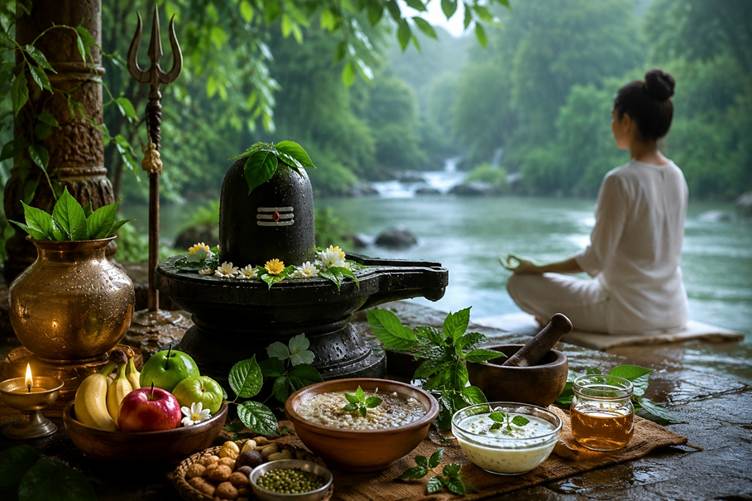
Shravan arrives during the heart of the monsoon, a season when nature undergoes remarkable transformation. Rivers overflow, forests flourish, and the earth is replenished after the scorching summer.
The Vedic sages believed that just as nature changes, our lifestyle should change too. This is why Shravan encourages lighter food, disciplined living, prayer, and self-reflection.
These practices are not random customs. They are part of a seasonal wellness routine that supports both physical and mental health.
Living in Harmony with Nature
The Vedic way of life teaches that wellness begins when we live in sync with nature rather than against it.
Shravan encourages us to slow down, simplify our routines, and become more mindful of our habits. This seasonal reset helps prepare the body and mind for the months ahead.
Ayurveda’s Hidden Wisdom During Shravan
According to Ayurveda, the digestive fire, known as Agni, becomes weaker during the rainy season.
This makes the body more vulnerable to sluggish digestion, bloating, and reduced immunity. To restore balance, Ayurveda recommends eating simple, freshly prepared meals and avoiding heavy or processed foods.
Eat Light, Fresh and Seasonal
Traditional Shravan meals often include khichdi, seasonal vegetables, fruits, buttermilk, and homemade preparations.
These foods are easy to digest and help maintain energy without burdening the digestive system.
Why Sattvic Food Matters
A sattvic diet is another important aspect of Shravan.
Fresh fruits, vegetables, milk, nuts, whole grains, and naturally prepared meals are believed to nourish both the body and the mind.
Beyond spiritual significance, these foods are rich in nutrients and support overall well-being.
The Real Purpose of Fasting During Shravan
Fasting is one of the most well-known traditions observed during Shravan, especially on Mondays.
However, the Sanskrit word Upavasa literally means “to stay near”—to stay close to the Divine through discipline and awareness.
Fasting Is More Than Skipping Meals
The purpose of fasting is not punishment or deprivation.
Instead, it encourages moderation, mindful eating, and greater awareness of our habits. It also allows the digestive system to rest while strengthening self-control.
In today’s fast-paced world, this practice teaches us the value of slowing down and making conscious choices.
Meditation: The Heart of Shravan Maas
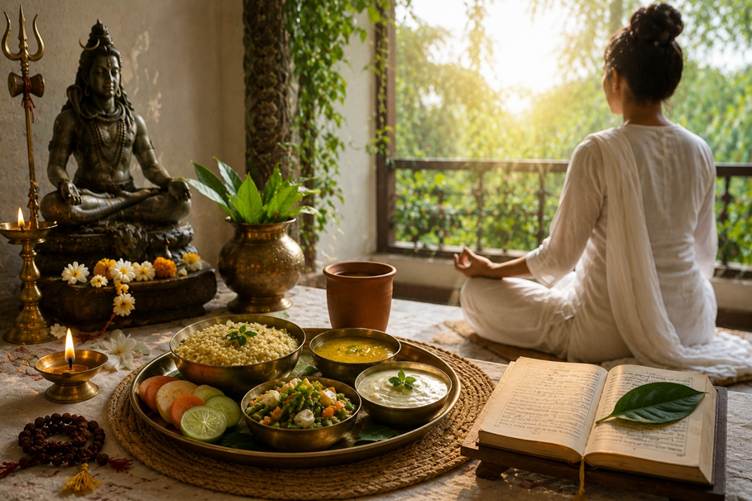
Meditation has always been at the centre of India’s spiritual traditions.
Shravan provides the perfect opportunity to develop a regular meditation practice because it naturally encourages silence and introspection.
Why Lord Shiva Represents Inner Stillness
Lord Shiva is often depicted in deep meditation.
His calm presence reminds us that true strength comes from mastering the mind rather than controlling the world around us.
Whether you chant Om Namah Shivaya, practise deep breathing, or simply sit quietly for a few minutes, meditation helps cultivate peace, clarity, and emotional balance.
Mindful Living: The Forgotten Practice of Shravan
Mindfulness may seem like a modern wellness concept, but it has been part of Indian traditions for thousands of years.
Shravan encourages people to become more intentional in their daily lives.
Small Habits That Create Big Changes
During Shravan, many people:
- Wake up early.
- Eat mindfully.
- Speak with kindness.
- Reduce unnecessary indulgence.
- Practise gratitude.
- Perform acts of charity.
Together, these habits create a calmer and more meaningful way of living.
What Modern Life Can Learn from Shravan Maas
Today’s lifestyle often revolves around stress, processed food, digital distractions, and constant busyness.
Interestingly, the ancient practices of Shravan offer simple solutions that remain relevant today.
Physical Wellness
- Seasonal eating
- Better digestion
- Balanced nutrition
- Moderation
Mental Wellness
- Meditation
- Emotional balance
- Reduced stress
- Improved focus
Spiritual Wellness
- Prayer
- Gratitude
- Compassion
- Self-reflection
These practices remind us that wellness is not only about fitness but about creating harmony in every aspect of life.
How You Can Follow the Shravan Wellness Routine
You don’t have to observe every ritual to embrace the wisdom of Shravan.
Begin with small, practical steps:
- Eat one sattvic meal every day.
- Spend 10–15 minutes meditating.
- Reduce processed foods.
- Limit screen time.
- Read a few pages from a spiritual book.
- Practise gratitude before sleeping.
- Perform one act of kindness each day.
Simple habits, when practised consistently, can bring lasting transformation.
Conclusion: An Ancient Wellness Routine for Modern Times
The ancient wellness routine hidden inside Shravan Maas reminds us that true health is not achieved through quick fixes or complicated routines.
It grows from living in harmony with nature, eating mindfully, practising self-discipline, nurturing inner peace, and making conscious choices every day.
As the rains renew the earth, Shravan offers us an opportunity to renew ourselves from within.
Perhaps that is the greatest lesson this sacred month has to offer—not just to devotees of Lord Shiva, but to anyone seeking a healthier, calmer, and more meaningful life.
Har Har Mahadev!
Written by – Richa Dixit